
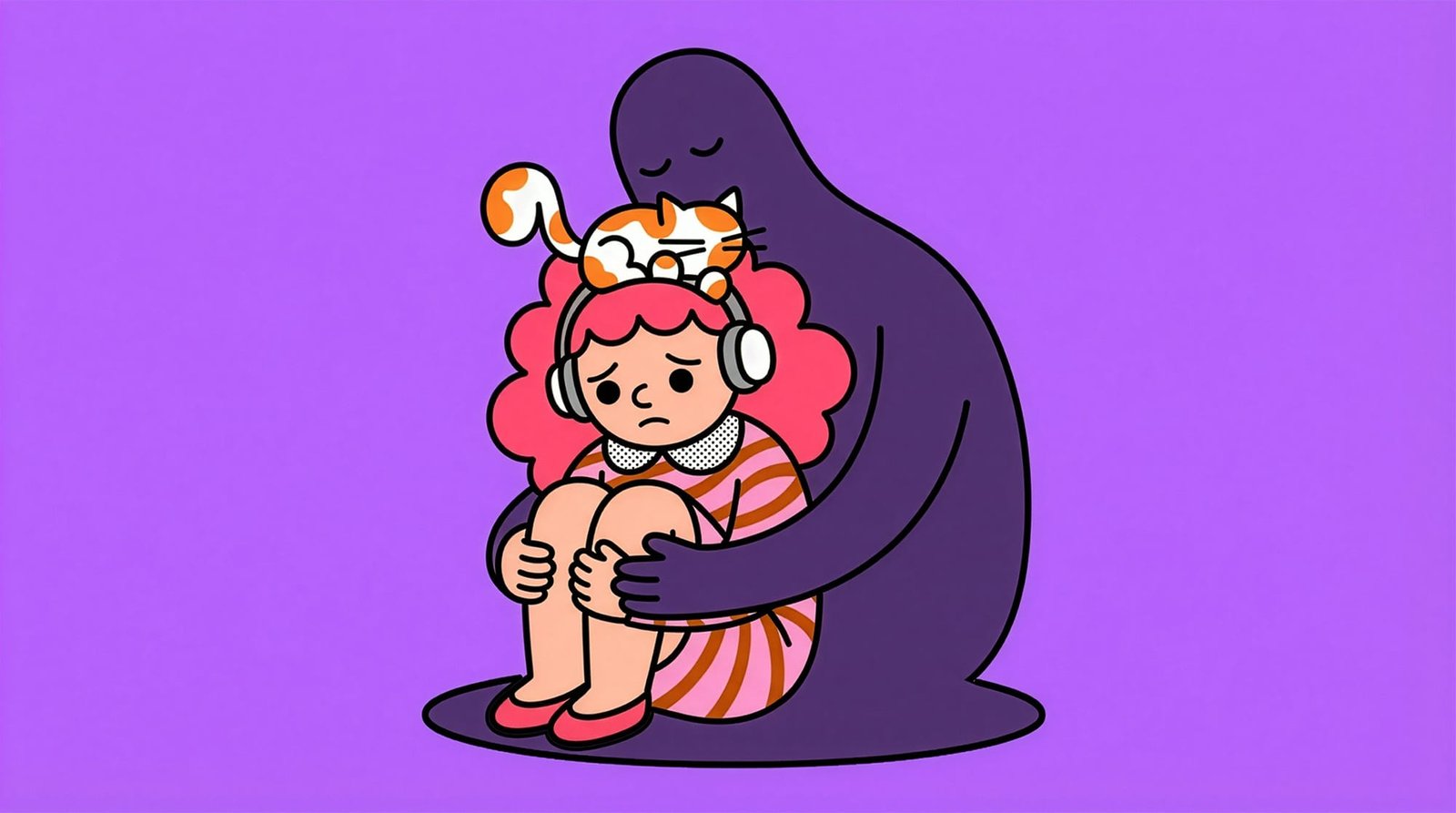
Shame is sneaky. It doesn’t just say, “You did something wrong.”
It whispers, “You are wrong.”
And that tiny shift can change everything… how we talk to ourselves, how we show up in relationships, and what we think we deserve.
I’ve found that shame often grows in silence, but it weakens the moment we name it.
A widely shared idea in shame research and teaching is that shame tends to intensify with secrecy and disconnection, so the antidote isn’t “try harder,” it’s connection, compassion, and self-love.
Self-love isn’t fluffy. It’s disruptive. It interrupts the loop where pain turns into self-attack, and self-attack turns into more pain.
This guide gently breaks down the role of shame, how it forms, what it can do to your mind and body, and how self-love practices can help you rebuild safety inside yourself—one moment at a time.

What Is Shame? Understanding the Role of Shame in the Human Mind
If you’ve ever googled what is shame at 2 a.m., you’re not alone.
Shame can be hard to describe because it doesn’t always arrive with a clear label. It often arrives as a mood shift, a shrinking feeling, a sudden certainty that you’re “too much” or “not enough.”
One simple way to understand shame vs guilt:
- Guilt tends to be behavior-focused: “I did something I regret.”
- Shame tends to be identity-focused: “I am the problem.”
That’s why shame feels so “global.”
It doesn’t attach to a single choice; it spreads like ink.
It can tint your self-image, your self-esteem, your sense of belonging, even your willingness to be seen.
Common shame messages (the ones that sound like “truth”)
Shame rarely speaks in full sentences.
It’s more like an internalized shame vibe.
But if we put words to it, it often sounds like:
- “You’re embarrassing.”
- “People will judge you.”
- “Don’t take up space.”
- “If they really knew you, they’d leave.”
- “You have to earn love.”
- “You should be over this by now.”
These aren’t just thoughts. They’re core beliefs trying to keep you safe, often in a clumsy, painful way.
Shame can be protective in the short term (keeping you from rejection, conflict, or visibility), but costly in the long term (keeping you from connection, self-respect, and growth).
Toxic shame vs healthy shame
You might hear people talk about toxic shame; the kind that attacks your worth and makes you feel fundamentally flawed.
That’s the shame that fuels self-criticism and chronic hiding.
Some people also reference “healthy shame” as a brief signal that you crossed a value line and need to repair.
If that concept fits for you, the key difference is this:
- A helpful signal nudges you toward accountability without shame.
- Toxic shame nudges you toward self-punishment.
You don’t need shame to become a good person. You need honesty, care, and the ability to repair.
How Shame Forms: The Roots of Shame Across Childhood, Culture, and Relationships
Shame usually isn’t something you “choose.”
It’s something you learn, often early, often quietly.
Early attachment and emotional mirroring
When we’re young, we learn who we are through other people’s faces.
Through tone.
Through what gets welcomed and what gets shut down.
If your feelings were met with warmth (“I see you, it makes sense”), you likely absorbed a sense of being acceptable, even when you struggled.
If your feelings were met with mocking, dismissal, or discomfort (“Stop crying,” “Don’t be dramatic”), you might have learned:
My emotions are a problem.
Over time, that can become internalized shame; not about what you did, but about who you are when you’re human.
This is especially common in environments shaped by emotional neglect (needs are minimized), conditional love (approval comes when you perform), or harsh criticism (mistakes equal rejection).
Family rules that quietly create shame
Some families don’t talk about emotions.
Others talk about them, just not kindly.
Shame can take root in patterns like:
- Perfectionism and constant “improvement”
- Sarcasm disguised as “jokes”
- Being praised only for achievement
- Being punished for having needs
- Being compared to siblings or peers
Even when caregivers had good intentions, the impact can still land as:
I have to be different to be lovable.
Cultural and social influences
Shame doesn’t form in a vacuum.
It forms inside cultures that reward certain bodies, identities, emotions, and achievements.
- Productivity culture can turn rest into guilt and worth into output.
- Gender norms can shame tenderness in some people and anger in others.
- Body ideals can create body shame that feels endless and personal.
- Religion can be a source of comfort or, for some, a source of religious shame when rules are used to control or condemn.
- Social media can intensify comparison mindset and social shame, especially when you’re already tender.
If you’ve ever felt a “fear of being seen,” it might not be vanity.
It might be nervous system memory: Visibility isn’t safe.
Peer experiences: bullying, exclusion, humiliation
Few things train shame faster than public humiliation.
Bullying, exclusion, and repeated comparison can teach the body:
Belonging is fragile. Stay small.
This is where fear of judgment and fear of rejection can become default settings, not because you’re weak, but because your system adapted.
Trauma and shame
When experiences are overwhelming, people often develop survival strategies:
freezing, fawning, people-pleasing, disconnecting, overachieving.
Later, shame may reinterpret those strategies as personal failure.
But many “shameful” behaviors are actually old coping skills.
The nervous system chose what it could.
Sometimes shame is what happens when survival gets mislabeled as character.

The Shame Cycle: Triggers, Thoughts, Feelings, and Behaviors
Shame isn’t usually a single moment.
It’s often a loop: a shame cycle.
What triggers shame
Shame triggers are personal, but common ones include:
- Making mistakes (even small ones)
- Receiving feedback
- Conflict or setting boundaries
- Feeling rejected or misunderstood
- Being visible (posting, speaking up, taking credit)
- Being vulnerable (needing comfort, asking for help)
Sometimes the trigger isn’t even the event; it’s the meaning you attach to it.
The inner critic: why shame becomes harsh self-talk
When shame hits, it often recruits an “inner critic” voice.
That voice can sound like negative self-talk:
- “You always ruin things.”
- “You’re so behind.”
- “Everyone else can do this.”
- “You’re embarrassing.”
Oddly, the inner critic often believes it’s helping.
If it attacks you first, maybe others won’t.
If it pushes you hard enough, maybe you’ll finally become acceptable.
But the cost is high: increased self-criticism, less self-trust, more anxiety, more hiding.
Shame responses: fight, flight, freeze, fawn
Shame isn’t just mental.
It’s a shame response in the body.
Many people move into a version of fight/flight/freeze/fawn:
- Fight: defensiveness, irritation, blame
- Flight: busyness, overworking, avoidance behaviors
- Freeze: shutdown, numbness, dissociation, “I can’t move”
- Fawn: people pleasing, over-apologizing, self-abandonment
None of these are moral failures. They’re nervous system strategies.
Behavioral patterns shame often fuels
Shame loves patterns that reduce short-term discomfort:
- Perfectionism and shame: “If I’m flawless, I’ll be safe.”
- Procrastination and shame: “If I don’t try, I can’t fail.”
- Hiding and shrinking: “If I’m invisible, I can’t be judged.”
- Overachieving: “If I do enough, I’ll be worth enough.”
- Self-sabotage: “If I mess it up first, rejection will hurt less.”
- Imposter syndrome: “If they praise me, they just don’t see the truth.”
Here’s the trap: shame can offer quick relief (avoid the email, cancel the plan, overwork until you feel “good enough”), but the long-term message becomes: I can’t handle being seen as I am.
That’s how a shame spiral keeps feeding itself.
How Shame Shows Up in the Body: Nervous System, Stress, and Somatic Symptoms
Shame isn’t just an emotion. It can be a full-body experience; heat, collapse, tightness, nausea, numbness.
When shame hits, your system may interpret it as a threat to belonging.
And for humans, belonging has always been tied to survival.
That’s why shame can activate the stress response so quickly.
Common body signals of shame
You might notice:
- Heat in the face or neck
- A sinking feeling in the stomach
- Tight chest or shallow breathing
- A “collapsed” posture, shoulders rounding, eyes down
- A sudden urge to disappear
- Numbness or spacing out (dissociation and shutdown)
If you’ve ever wondered about shame and anxiety or shame and depression, it’s often because chronic shame keeps the body in threat mode or collapse mode; either hyper-alert or shut down.
Not as a diagnosis, but as a lived pattern many people recognize.
Why self-love must include the body
When shame is in the nervous system, “positive thinking” can feel like trying to talk over a fire alarm.
Self-love that truly supports building inner safety often includes nervous system regulation and somatic healing; gentle ways of telling the body, I’m here. I’m not abandoning you.
That might look like:
- Feeling your feet on the floor
- Placing a hand on your chest
- Slowing your exhale
- Softening your jaw
- Looking around the room and naming what’s safe
Not as a performance.
As a tiny act of returning.
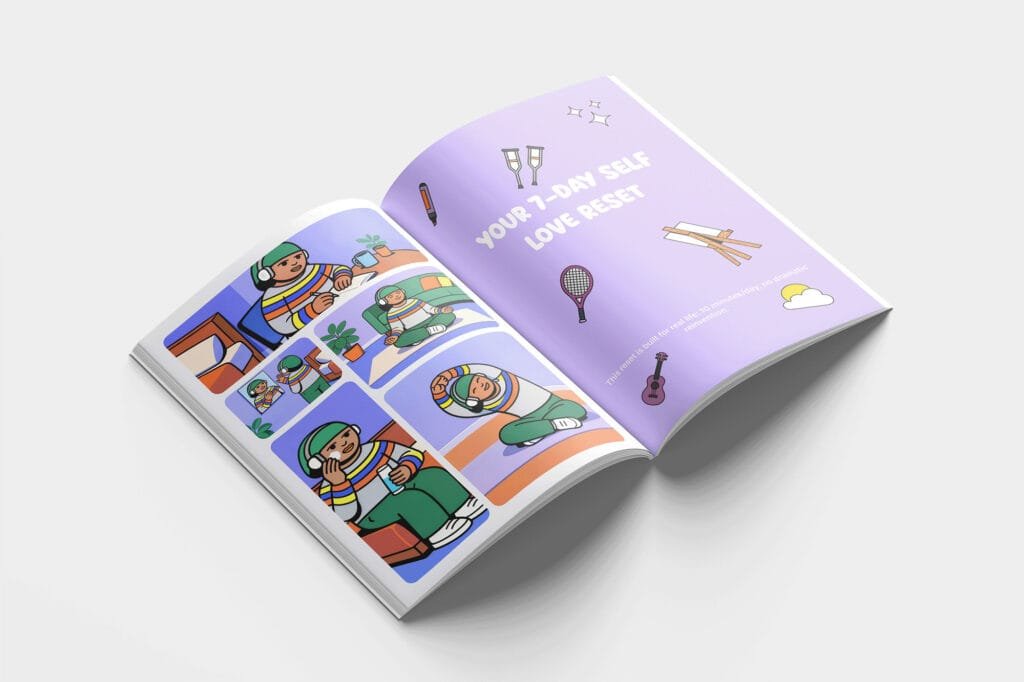
Get your personalized Soft Reset plan in 2 minutes.
Answer a few quick questions and we’ll match you with a gentle plan based on your needs , capacity & vibe so you can feel steadier and build self-trust with small daily steps.
Shame vs. Healthy Accountability: Replacing Self-Attack With Self-Respect
A common fear is:
If I let go of shame, I’ll stop growing. I’ll become careless.
But shame doesn’t create lasting change.
It creates fear-based change; fragile, exhausting, and often resentful.
Responsibility without self-punishment
Healthy accountability can sound like:
- “I made a mistake. I want to learn from it.”
- “That impacted someone. I care, and I want to repair.”
- “I don’t like how I acted. I can choose differently next time.”
Shame sounds like:
- “I’m horrible.”
- “I ruin everything.”
- “I should punish myself so I don’t do it again.”
Self-punishment doesn’t build character.
It erodes trust.
A repair mindset
Repair is humble, specific, and forward-facing.
It might include:
- Acknowledging what happened
- Apologizing without excuses
- Making amends where possible
- Changing one small behavior next time
This is making amends without turning your identity into a courtroom.
Building inner trust
Inner trust isn’t built through dramatic self-lectures.
It’s built through consistent, small actions:
- You rest when you said you would.
- You tell the truth gently.
- You try again after a slip.
- You choose self-respect over self-attack.
That’s not self-esteem as a mood.
That’s self-worth as a practice.
How Self-Love Interrupts Shame: The Antidotes That Actually Work
Self-love doesn’t mean you never feel shame.
It means you don’t let shame become your home address.
Think of self-love as a practice of safety, not ego.
Not arrogance.
Not pretending everything is fine.
More like: I refuse to abandon myself when I’m hurting.
Three disruptors tend to matter most: awareness, compassion, connection.
1) Awareness: noticing the shame story
Awareness is the moment you realize, Oh. This is shame. Not truth. Not prophecy. Not your identity.
Sometimes just labeling it creates space:
- “This is a shame spiral.”
- “My inner critic is loud right now.”
- “I’m in a shame response.”
That shift matters. You stop merging with the story.
2) Compassion: changing the tone inside
Compassion isn’t letting yourself off the hook. It’s treating yourself like a human you intend to keep.
If “self-love” feels too big, try “self-respect.” If “self-compassion” feels cheesy, try “basic decency.”
Kindness can feel fake at first because your system may be used to motivation through fear. But you can make it realistic by keeping it simple and specific:
- “This hurts.”
- “I don’t have to solve everything right now.”
- “I can take one small next step.”
- “I’m allowed to be human.”
This is trauma-informed self-love in spirit: gentle, non-demanding, grounded.
3) Connection: letting yourself be seen safely
Shame insists: Hide. Healing often whispers: Let someone safe witness you.
Connection doesn’t mean oversharing. It can be gradual and boundaried:
- “I’m having a hard day.”
- “I’m feeling tender.”
- “Can you just sit with me for a minute?”
This is how shame resilience grows: not by becoming invincible, but by learning you can be seen and still belong.
Practical Tools to Break Shame Spirals (Self-Love in Action)
These aren’t rules.
They’re options; small tools you can try, keep, adjust, or set down.
The “Name It to Tame It” method
When shame hits, try naming what’s happening without merging with it:
- “I’m noticing shame.”
- “I’m having the thought that I’m unlovable.”
- “My body feels like it wants to disappear.”
You’re not arguing with the feeling. You’re creating a little room around it.
A self-compassion micro-script
When you feel the shame attack rising, try one of these:
- “Ouch. That landed hard.”
- “This is a moment of suffering.”
- “I’m not alone in this—being human is messy.”
- “What would I say to someone I love right now?”
If you want something even simpler:
“I can be kind to myself and still take responsibility.”
Inner critic journaling (gentle, not dramatic)
Sometimes the inner critic is a protector with terrible methods.
Try writing:
- What is the critic saying?
- What is it afraid would happen if it stopped?
- What does it cost me when I believe it?
- What would a wiser voice say instead—one I could actually believe?
This isn’t about winning an argument. It’s about understanding the system you’ve been living in.
Boundary practice: saying no without self-abandonment
Shame often makes boundaries feel selfish.
But boundaries and self-love are deeply connected.
A few gentle scripts:
- “I can’t do that, but thank you for asking.”
- “That doesn’t work for me.”
- “I need some time to think about it.”
- “I’m not available for that conversation right now.”
Afterward, shame may flare: You’re difficult.
Try responding with self-respect: I’m allowed to protect my capacity.
Exposure to safe connection (gradually)
If you’re working with fear of being seen, you can practice in tiny doses:
- Share one honest sentence with a trusted person.
- Ask for reassurance directly (once).
- Let someone help you with a small task.
- Tell the truth about a feeling without explaining it away.
The goal isn’t to force vulnerability.
It’s to create evidence: I can be real and still be okay.
Self-forgiveness steps: acknowledge, validate, repair, release
Self-forgiveness isn’t pretending it didn’t happen. It’s choosing to stop using pain as punishment.
A gentle sequence:
- Acknowledge: “This happened.”
- Validate: “It makes sense I feel what I feel.”
- Repair: “What’s one step I can take to make it right?”
- Release: “I’m willing to learn without hating myself.”
If you can’t release yet, that’s okay. Sometimes release comes in layers.
Self-Love Foundations: Rebuilding Identity After Shame
Shame damages identity. It tells you who you are in the worst possible language.
Rebuilding is less about becoming “new” and more about returning to what was always true: you are human, worthy, and capable of growth.
Values-based identity
Shame-based identity says: I am what I fear. Values-based living says: I am what I practice.
You might ask:
- “What kind of person do I want to be when I’m stressed?”
- “What do I want to stand for in my relationships?”
- “What do I value more than being liked?”
Values don’t erase shame, but they give you a compass when shame tries to steer.
Self-worth vs. achievement
If your self-worth is tied to performance, shame becomes constant—because performance is never perfectly stable.
A quieter, sturdier truth:
- You can want to grow without making your worth conditional.
- You can care about outcomes without using outcomes as proof of value.
This is where self-love becomes practical: decoupling worth from winning.
Reparenting basics (simple and steady)
Reparenting isn’t about blaming the past.
It’s about giving yourself what you didn’t get consistently: steadiness, warmth, protection, encouragement.
It can look like:
- Keeping promises to yourself in small ways
- Speaking to yourself with basic respect
- Letting rest be a right, not a reward
- Offering comfort when you’re upset, not critique
Some people call this inner child healing.
You don’t have to use that language.
The practice is the same: you stop abandoning yourself.
A self-love routine: daily, weekly, and in-the-moment
Self-love doesn’t need to be a grand ritual. It can be a few anchors.
Daily (5 minutes):
- A hand on your chest and one kind sentence
- A short grounding exercise
- A “what do I need today?” check-in
Weekly:
- One restorative activity (walk, bath, quiet café, journaling)
- One meaningful connection
- One boundary that protects your energy
In the moment:
- Name the shame spiral
- Exhale slowly
- Choose one next respectful action
This is how self-love foundations get built—like laying bricks, not chasing fireworks.

Shame in Relationships: Attachment, Conflict, and the Fear of Being Seen
Shame doesn’t stay inside. It affects how you attach, how you argue, how you ask for love.
How shame impacts intimacy
When shame is loud, you might:
- Hide needs to avoid being “too much”
- Avoid vulnerability to avoid rejection
- Overfunction to be “easy to love”
- Keep score because asking directly feels unsafe
This is often about attachment and shame: the fear that closeness will lead to exposure, and exposure will lead to abandonment.
Shame scripts in conflict
In conflict, shame often drives:
- Defensiveness: “I didn’t do anything wrong!” (even when you care)
- Stonewalling: shutting down, going silent
- People-pleasing: “You’re right, I’m awful” (to end the tension)
- Over-explaining: trying to earn forgiveness through perfect wording
These are shame coping skills, attempts to protect connection by sacrificing yourself or attacking first.
Secure attachment behaviors you can learn
Secure attachment isn’t a personality trait.
It’s a set of learnable behaviors, like:
- Naming feelings without blaming: “I felt hurt when…”
- Asking for reassurance directly: “Can you remind me we’re okay?”
- Taking breaks without disappearing: “I need ten minutes to regulate, then I’ll come back.”
- Repairing after conflict: “I don’t like how I handled that. Can we try again?”
Communication tools: owning feelings without self-blame
A simple structure:
- Feeling: “I’m feeling anxious / tender / embarrassed.”
- Need: “I need reassurance / clarity / a softer tone.”
- Request: “Would you be willing to…?”
Not perfect. Just honest. And if shame shows up afterward, that’s where self-love meets you: I’m allowed to have needs.
When Shame Needs Extra Support: Therapy, Coaching, and Healing Resources
Sometimes shame isn’t just occasional. Sometimes it feels chronic, implemented into identity, relationships, and the body.
If shame is long-standing or linked to painful experiences, extra support can be a loving choice; not a sign you failed.
Signs shame may be chronic or trauma-linked
You might notice:
- Persistent “I’m bad” beliefs that don’t respond to reassurance
- Intense fear of judgment that limits your life
- Strong shutdown, numbness, or dissociation during conflict
- Repeating patterns of self-sabotage or self-hatred
- Feeling unsafe being seen, even by safe people
These are not diagnoses.
Just signals that your system may need more than self-help tools.
Evidence-based options people often find helpful
Different approaches support different needs.
Some people explore:
- CBT for shame (working with thoughts and patterns)
- Compassion-focused approaches (building warmth and safety internally)
- Somatic-oriented therapies (working with the body and threat response)
- EMDR for shame when shame is tied to specific distressing memories
If you’re considering support, you deserve someone who feels safe, respectful, and steady—whether that’s therapy for shame, a trauma-informed coach, or a supportive group.
What to look for in a supportive professional
You might prioritize:
- A non-shaming, collaborative style
- Comfort with shame, trauma, and attachment patterns
- A pace that feels gentle—not forcing disclosure
- Clear boundaries and consent-based work
A good fit often feels like: I can breathe in the room with them.
A gentle reminder
Healing isn’t linear.
You can have a beautiful week and then get knocked over by a small trigger.
That isn’t failure.
That’s being human with a nervous system that remembers.
Support isn’t about “fixing” you.
It’s about helping you return to yourself.
Join the Waitlist
A kinder inner voice, daily.
Nostalgie World is a story-driven well-being brand that invites you into a gentle daily practice of reflection; through nostalgic characters, guided journaling, and emotionally safe rituals designed to foster self-compassion in just a few minutes a day.
No pressure.
No streak shame.
No clinical language.
Just a small moment of care, whenever you need it.
Conclusion
Shame isn’t proof that you’re broken.
It’s often proof that you learned to survive in an environment where being human didn’t feel safe.
And the most powerful shift you can make isn’t “be perfect” or “never feel shame again.”
It’s learning to interrupt shame with self-love; in real time, in real life, with real compassion.
Start small. Notice the shame story. Name it. Breathe.
Offer yourself one sentence of respect.
Reach for safe connection.
Over time, those tiny moments build something big: self-worth that doesn’t collapse under pressure.